Telemark-Tour in the Gaspésie (22.02.-01.03.2003)
About one week in advance I got the information that I had a spot on the legendary trip to the Chic-Chocs in the Gaspésie peninsula, that the McGill Outdoor Club organizes every year. This mountainscape is about 900km northeast of Montréal.
We parted from Montréal with 14 people, but then split up into three groups, a beginners and an advanced telemark group and one cross-country skiing group. However, we still spent the first night together in our "base camp", where we had to dig about 1m deep into the snow before putting up our tents.
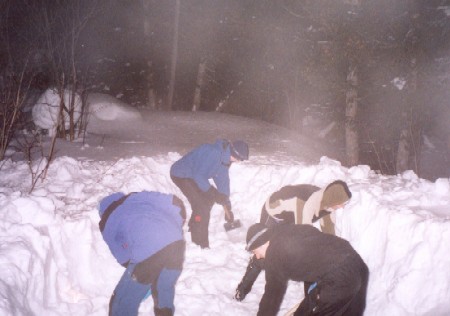
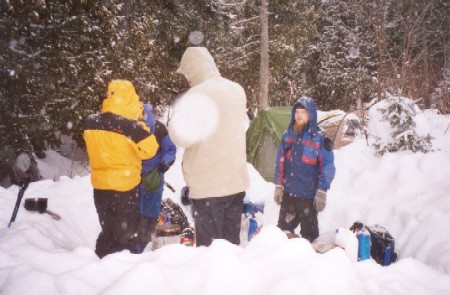
Breakfast on the first morning.
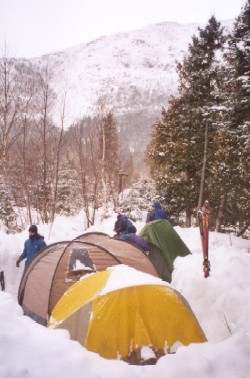
The base camp at the foot of Mt. Albert (1100m), one of the highest peaks in the "Parc National de la Gaspésie".
On the next day the other two groups left to an entirely different area within the park, but our group did telemark-skiing in the mountains around the campground, and we camped there for two more nights. On the second evening, we actually had a winter-thunderstorm, and it started to hazel like crazy, which is a bit inconvenient, when you are just trying to prepare a camping meal outside. Fortunately, the campground had one heated bathroom where it was possible to get warm once in a while.
On the next morning, we woke up to 30cm of new snow in the middle of a blizzard at about -20 degrees Celsius. This was too much for us: We went to some chalets not far away and asked the people whether we could have breakfast inside.
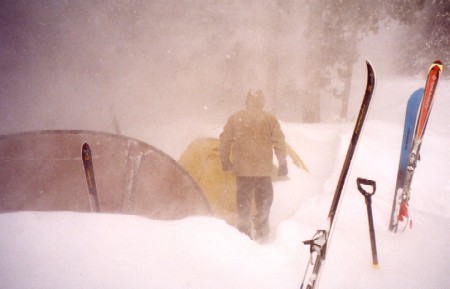
Our base camp during the blizzard.
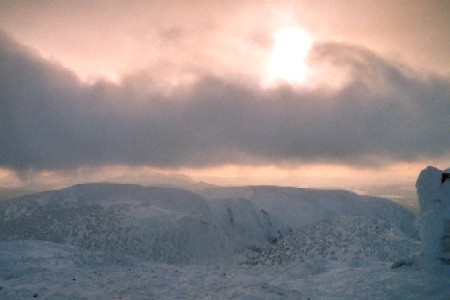
On the third day, we parted from our camp and started a tour through the National Park, staying in a different hut every night. At the same time the weather changed, giving us several days of incredible scenery. Just look at the photos and enjoy:
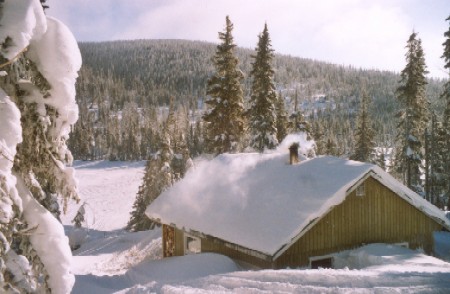
The second hut we stayed in.
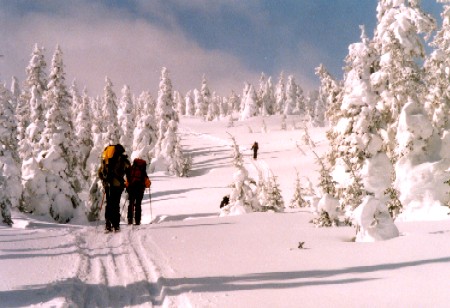
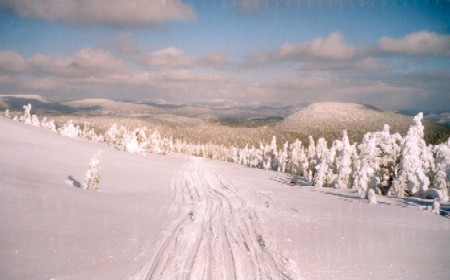
The Gaspésie area has the most snow of entire Québec, as it is very close to the ocean. In some ares there were three to four metres of snow, and the tree tops of massive trees would just peak ot of the snow.
Most of the time, we were actually doing cross-country skiing. But on the last two days, we had the chance to do some real telemark on alpine terrain. Somehow, this technique of skiing appeared very weird to me (it was the first time for me to do telemark), so I decided to use the skies as if they were normal downhill skies.
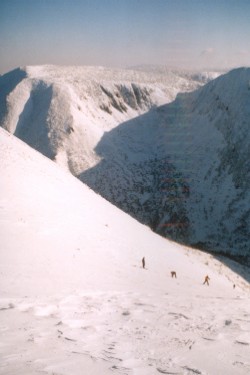
One of the downhill slopes. The problem about backcountry skiing is that you have to walk up every slope again after skiing down it...
On the way back to Montréal, we came past the ocean, at this time of the year totally frozen.
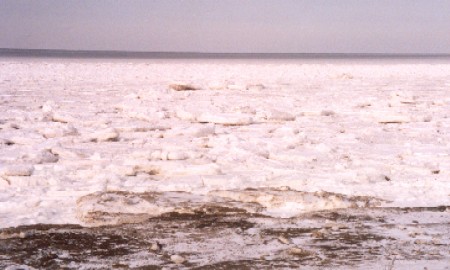
The water you can see in the background is only the high tide covering the ice - there is still a thick layer of ice beneath that is broken and shifted every time the tide comes in.
To the next page >>